Thoughts on this Science Supplement for Small Children?
So I wrote out something today for my oldest boy (Internet codename Munchkin, entering first grade this fall). He really enjoys science, probably because Daddy works with it so much. His primary interest is astronomy and astrophysics (he just learned about merging galaxies and his head is still spinning from that), but we were also having a lesson on kitchen chemistry the other day. So I wrote up and printed out a simple list of question-and-answer kitchen chemistry facts for him to study while he was at his grandparents’ this week.
As I did so, it occurred to me that this might actually be a possible book I could do. I haven’t planned anything out other than what I’m doing for Munchkin and, eventually, his little brothers Rascal and Hooligan. For them, I was going to do some more chemistry, physics, astronomy, and human anatomy; and when Grandma was looking over the list, she asked me to do some on weather, too. Other than that and jotting down ideas, I don’t really have a “book” planned.
I know there’s a neat little board-book series called Baby University. This is where Munchkin’s interest really started; I’d gotten him Astrophysics for Babies when he was little and he really liked it. When he finally started talking he’d repeat the lines a lot. But I also haven’t seen anything that really bridges the gap on more of that kind of science learning. Baby University is great, but very limited for where Munchkin’s at right now. So I decided to write my own.
And since I have my very obvious Timothy well in hand, I figured maybe I could see if any of the parents in here might like something like this? I’ve never designed a kid’s book before.
Here’s the one-page list I wrote up for Munchkin today. I imagine I would still need to simplify some of the vocabulary words, but Munchkin is already familiar with most of this and it wasn’t intended to be a stand-alone, but I would really love some feedback on it anyway. I can always edit it.
I bet I can also write up some good “put this into practice” lessons for the back of a book where a parent can help this become more than book knowledge. Stuff like observations and making models for astronomy, experiments for physics, and recipes to demonstrate chemistry (and also get cookies, which is always a great bonus).
What is a physical change?
A physical change is when matter changes to a different state by mixing it or changing its temperature.
What are the three main states of matter?
The three main states of matter are solid, liquid, and gas.
What is it called when matter goes from one state to another?
When matter goes from one state to another, it is called a phase change.
What causes a phase change in the kitchen?
A phase change normally happens because of a change in temperature.
What is the most common substance that will undergo a phase change in the kitchen?
Water is the most common substance that will undergo a phase change because it is solid when frozen, liquid when melted, and releases a gas called steam or water vapor when boiled.
What is condensation?
Condensation is when tiny amounts of water in the air touch something colder and condenses, turning back into a liquid.
When can you most commonly see condensation in the kitchen?
Condensation most commonly shows up on the lid of a cooking pot or on a container holding a cold drink like juice or ice tea.
What is a chemical change?
A chemical change is when matter changes its form or appearance in a way that changes what it is, such as when bread is baked or an egg is cooked.
What is an acid?
An acid is a substance that can chemically break things down, and can react with a base to release a small amount of gas. Foods with acids usually taste tangy or sour.
What are some examples of acids found in the kitchen?
The most common acids found in the kitchen are lemon juice, lime juice, vinegar, and substances heavy in tomatoes like red sauce or ketchup.
What is a base?
A base is a substance that can react with an acid to neutralize it and create a small amount of gas. Most bases feel slippery or soapy in your fingers.
What are some examples of bases found in the kitchen?
The most common bases found in the kitchen are baking soda and egg whites.
What is in baking powder?
Baking powder contains both baking soda and an acid, which will cause a reaction when cooked.
Update:
The list of topics I feel confident enough that I could do in this style are:
Astronomy
Astrophysics
Forces and Motion
Particle Physics
Human Anatomy
Geology
Paleontology
Weather
Kitchen Chemistry
(Think of the difference between Astronomy and astrophysics as the first being what we see, and the second being how it works.)
I could also do historical topics and Classical mythology, and plan to make them for my boys, but I suspect there's more demand for the science side.
Working title: The Little Genius Series.
Working tagline: “Answers for Little People with Big Questions."
Very rough sample covers generated with AI (I like the astrophysics one better than kitchen chemistry, but they're just there to give a sense of it and it'll be replaced by human art):
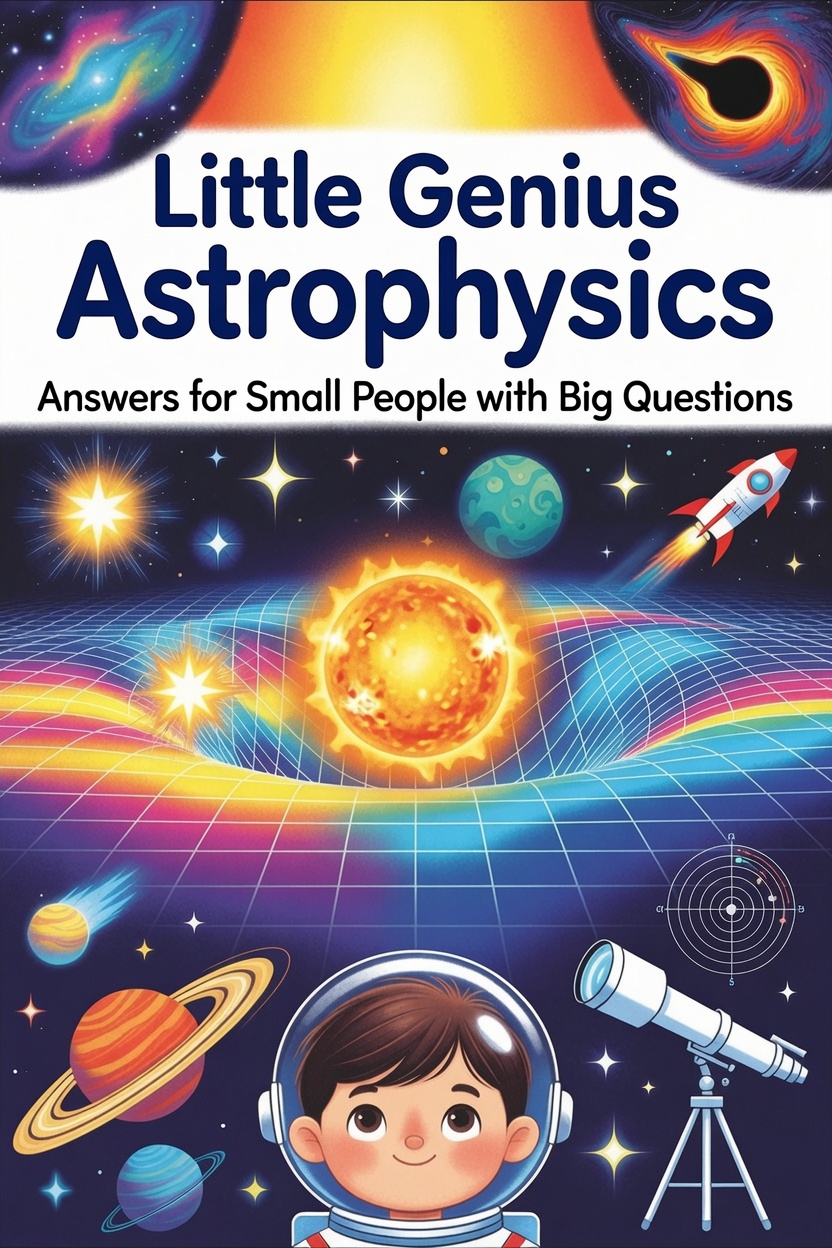
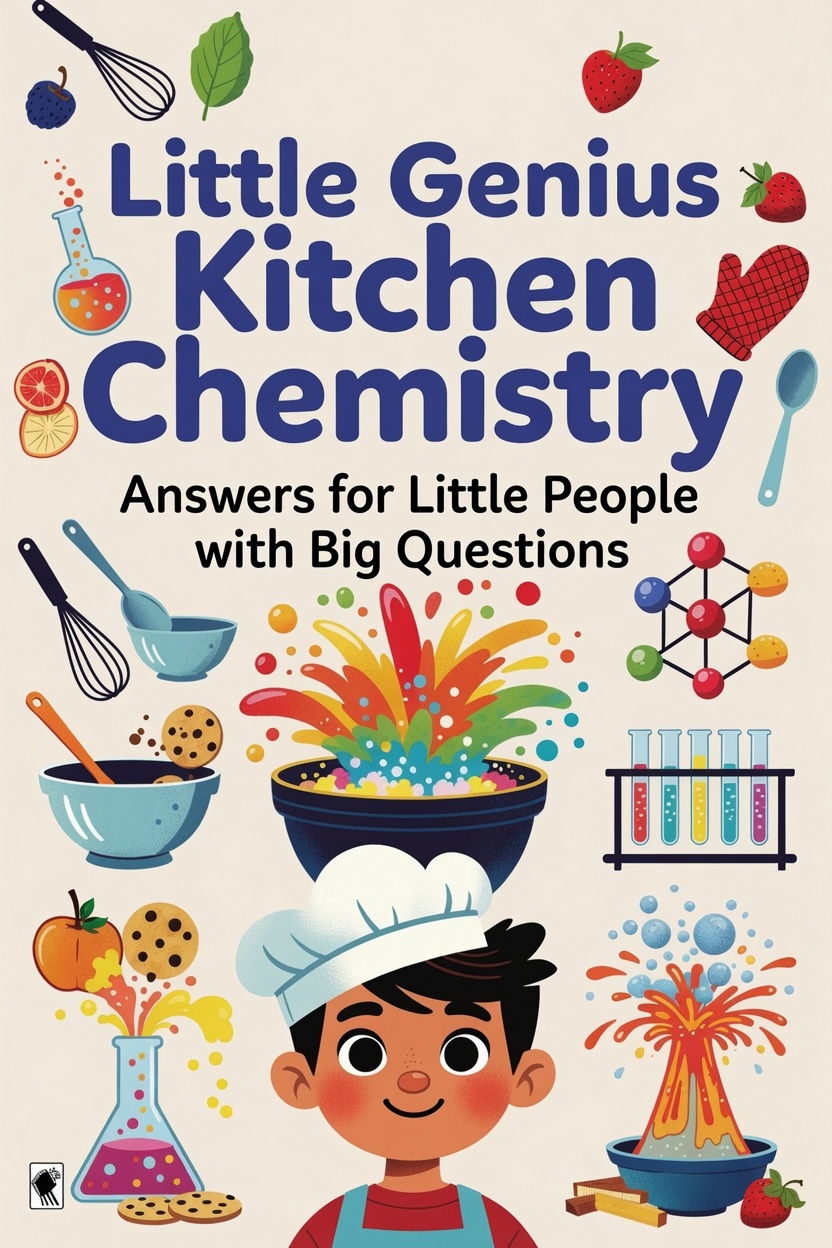
When I get something useable I'll post a link to a free PDF for parents to test with their kids. It'll have "Dive Deeper” sections for kids on the older side of the target audience or their parents that explain some things in more detail.
If anyone has specific requests, I will prioritize those. I have an unpredictable amount of free time so I don't know when I'll have more. 🙂