Another Tactic
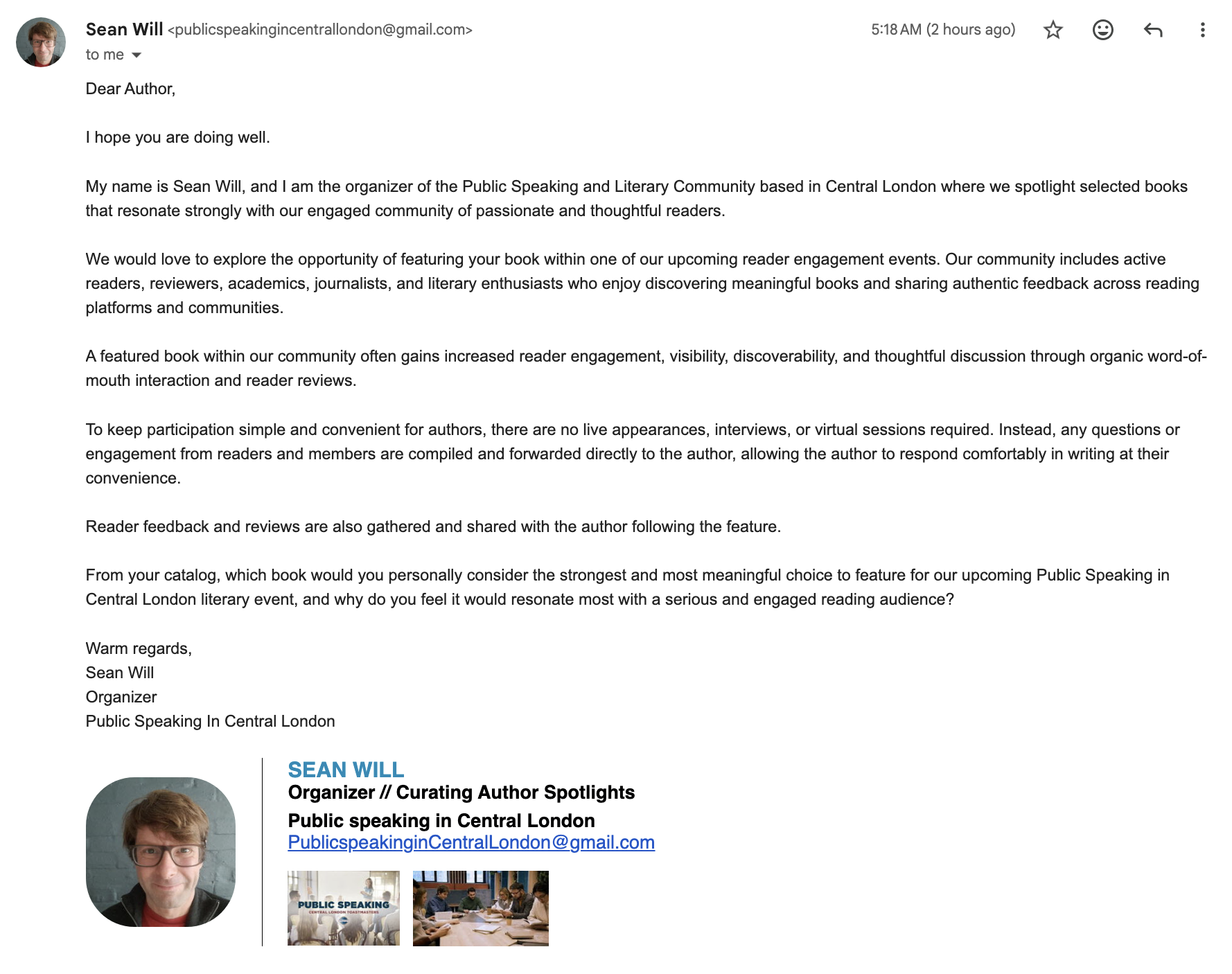
This email looked more official upon first glance, but I wanted to add it here to highlight a few red flags you can spot immediately.
Starting with “Dear Author” - it was probably copy and pasted to thousands of others. A very generic email, assuming I have multiple books published (which I don’t), and that I would be interested in academics and journalists. There are scams that will personalize an email to you, of course, but this is just a sign that the scammer is banking on the appeal to acclamation.
No official website, even though the signature at the end looks official. The email name is a desperate attempt to sound professional, using a free email service.
Ending with a simple, non-threatening question just to “get the conversation started”. I have one children’s book published, so his question about a “serious reading community” made me laugh.
I could not find this “Sean Will” by searching Google, but I did search Google for his photo and found this same profile pic on a website where he was the leader of several public speaking events in London, all with only 1 member each, himself. The most recent was 2 years ago. Either the scammer used a real image of this real person to reach out, or they created this fake profile a while back and have just been trying to draw people in.
Be on the lookout. As AI gets better, it will help scammers craft more convincing pitches.